Which engine oil suits a car best
In this section: 32 articles
- How to correctly choose automotive oil?
- Which car oil is better?
- What Criteria Should You Use to Choose
- What to take into account when choosing engine oil?
- What Criteria Should You Use to Choose Automotive Oil?
- What to take into account when choosing oil?
- What Parameters Should You Use to Choose an Engine Oil?
- What Criteria Should You Use to Choose Engine Oil?
- Choosing the right oil
- How to correctly choose engine oil?
- Choosing oil: the manufacturer's approval
- Which oil is better?
- Which car engine oil is better?
- What to take into account when choosing car oil?
- In Brief: Does Oil Add Horsepower?
- In Brief: More Expensive Doesn't Mean Better...
- Choosing oil: by parameters and approvals
- How to choose the right automotive oil?
- How to correctly choose automotive oil?
- How to choose the right automotive oil?
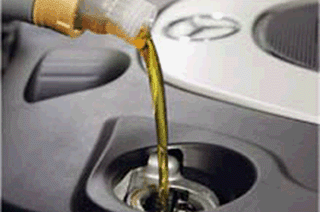 Car owners often try to save money by buying a cheaper engine oil rather than an expensive one. Others do the opposite, tracking down the most expensive oil and pouring it into the car without a second thought. In both cases the choice was made without any real thought, and the car owner was guided purely by price level. To choose the best oil for your car, you need to find out what car oils today's market actually offers, and what you should actually be using.
The engine is the heart of the car, and oil is the essential lubricant that the engine's service life largely depends on. It's long been proven that a good (suitable) oil extends the engine's life, while a bad (unsuitable) one shortens it. And on the outside, the engine may initially show no signs of damage at all – then, like a torn alternator belt, it fails at the worst possible moment.
There are several main parameters used when choosing engine oils. First and foremost is the oil's viscosity – this is the most significant characteristic, chosen based on the engine's design, its main operating modes, and other factors.
Under the American Society of Automotive Engineers system, viscosity is defined by an SAE rating. This classification system is international, and every car manufacturer uses it. So it's worth finding out the required oil viscosity at the time you buy the car.
Just as important for a car owner is usually the question of choosing the oil brand. Of course, a well-known manufacturer will always offer good-quality engine oil. However, in the chase for profit, counterfeits appear on shop shelves – low-quality products that can put an engine out of action. You can spot a counterfeit by checking for a certificate, agreements with the manufacturer, and by looking for the distinguishing marks and holograms found on genuine products.
Car owners sometimes also face the choice between synthetic and mineral oil. Synthetic oils have low viscosity and contain components that clean off carbon deposits. For an old engine this can be undesirable, so as not to increase its wear.
Don't forget about periodically changing spent oil, and check on the engine's operation just as often as you check the alternator belt, brakes and clutch, so you can catch damage in time.
By following all these recommendations, you can extend your engine's service life and worry less about repairing the car.