How to safely buy a car over the Internet
In this section: 36 articles
- Mitsubishi Lancer X - changes and specifications
- Diagnosing a car “by eye” - picking an accident-free car
- Renting a car abroad? Easy as pie!
- Phoenix Motors - a Suzuki dealer in Petersburg
- Ford Focus
- The Ford Explorer - a great car for active, sporty owners
- Attention to detail matters most when choosing a car
- Car Valuation Is a Job for Professionals
- Test drive: the Toyota RAV4
- Automotive news from the Subaru group
- The car and the road: believe in your own abilities!
- What's New in OSAGO for 2010
- Car rental in Turkey
- Where do wrecked cars end up?
- Audi Centre Petersburg: official Audi dealer
- Moscow car pawnshops during the crisis
- How to safely buy a car over the Internet
- Sale of confiscated cars by Ukrainian banks
- Advantages of the express car buy-back service
- Choosing your first car
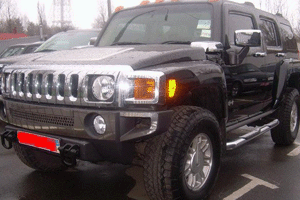 Looking at the statistics, you have to admit that cases of fraud and forgery have become more frequent when buying a car through online stores. Many potential customers of online dealerships ask themselves: is buying a car over the Internet really that dangerous, and what does the fraud actually consist of? The whole scheme scammers run is built on simple human weaknesses.
The most common type of fraud. First, the scammers list cheap cars in online stores at a below-market price. The owner of these cars is an anonymous private individual whose phone is always busy, never answers your attempts to get through, or simply doesn't exist. Failed attempts to reach the seller by phone push the buyer to write to their email instead. And then, unexpectedly, a reply arrives — very quickly, too. The gist of the letter is this: you're asked to pay for the car to an intermediary company that currently holds it in storage, and once you've checked all the car's parameters, the intermediary will transfer the money to the seller. It all ends with you transferring the money and never seeing either the car or the company again.
Another common fraud scheme. It starts the same way as the first: the price of the car is far below its real market value. The seller's phone doesn't answer, and you send an email. The text of the letter is nearly identical, but differs in a few details. This letter talks about a "safe deal", but you're asked to send the payment for the car via Western Union, after first signing a purchase agreement by mail. To make it fully convincing, the scammers even ask you to send them a secret code after the car is delivered to you. But it's all a lie. No such secret code exists — to receive a Western Union transfer, the recipient only needs the sender's details, which they can easily lift from the bill of sale. The code the scammers mention is actually needed for a bank transfer, and the enterprising "seller" quickly collects the money using a forged document and vanishes.
At the start of 2008 yet another new method of fraud appeared. Criminals use the popular website mobile.de, where they register a company with fake contact details, or buy up an already-registered car-dealership company, to sell cars at low prices.
These types of fraud can trip up even seasoned buyers. The golden rule for staying off the scammers' hook is: never buy a car for 2-3 times less than its market value, and never pay in advance.