Which viscosity is better for the engine?
Which viscosity suits an engine better?
In this section: 7 articles
The common belief is that the higher the viscosity at high temperatures, the better. In particular, oils with a high high-temperature viscosity figure are recommended for sports cars. But that absolutely doesn't mean that if you pour a sports oil into your everyday engine, it will suddenly become sporty or perform better. Quite the opposite is far more likely – you'll lose power that way and wear the engine out fast.
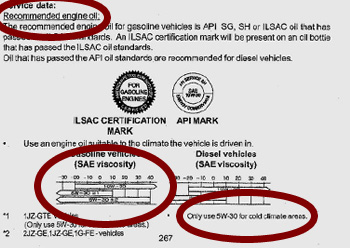 I'll say it again , for the umpteenth time – you should never, under any circumstances, put an oil into your engine whose viscosity isn't specified by the car manufacturer for your particular engine! The car's manufacturer has accounted for every possible driving mode for your engine and recommended exactly the viscosity parameters that are optimal for THIS engine.
A very telling experiment was carried out by Mikhail Kolodochkin and Alexander Shabanov, and described in issue No. 3/2008 of the magazine "Za Rulem". They tried pouring an oil with a high-temperature viscosity of 50 into the engine of a VAZ "eight" and found (and proved) a substantial drop in power, along with increased engine wear, compared with the manufacturer-specified engine oil with an upper viscosity of 40.
Just don't smirk and say "ah, a Zhiguli, well that explains it…". The experiment would have produced exactly the same results on any foreign car, because the whole point lies precisely in what maximum viscosity the car's manufacturer has specified!
P.S. Given the many questions about car oil viscosity on the site's forum, read the continuation of this topic: which is worse for an engine – oil viscosity that's too high or too low.