Ethylene glycol and other achievements protecting your car
In this section: 7 articles
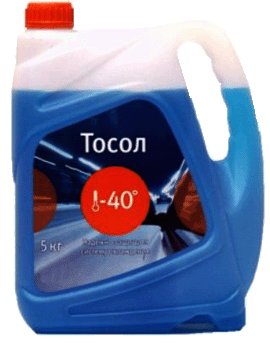 Any experienced car owner knows that a vehicle needs constant care. Especially when it comes to the engine, the car's central component. How well the engine runs depends not only on good petrol or a sound lubrication system, but also on the fluid in the cooling system. It's made up of various chemical compounds, such as propylene glycol. These compounds are what protect the car from freezing or overheating. Colloquially, this fluid is called antifreeze.
For some reason, many car owners are convinced that changing the cooling system fluid on time is a minor, secondary chore.
It's often assumed that this has no bearing whatsoever on the car's driving performance. In fact, antifreeze that's been in use a long time can actually harm the vehicle. The reason is that coolant ages over the years: the amount of inhibitors in it gradually drops, and it becomes prone to intense foaming. But the most unpleasant part is that under its influence, unprotected metals start corroding quickly.
The base of any antifreeze is usually a glycol-water mixture. In Russia, for instance, ethylene glycol is the most commonly used compound for this. Its service life is set by the manufacturer. Sometimes, though, the fluid fails before its time. If the antifreeze has turned brown, gone cloudy, or developed a sediment, it's time to change it urgently.
Sometimes the fluid in the cooling system simply drops in level. In that case, you can top it up. It's not advisable to mix antifreezes from different makers, since they may be produced to different technical specifications and turn out incompatible. If you're in a bind with no suitable fluid on hand, it's better to use ordinary boiled or distilled water. Then replace the whole fluid in the system later on.
Choosing an antifreeze for your car isn't hard. It's enough to go by the carmaker's recommendations. Also, when buying, it's better to favour specialised shops over street stalls.
By the way, coolant should never be used undiluted. A good antifreeze is only an aqueous solution of ethylene glycol or some other similar chemical compound. The concentrate itself is harmful to the car. Despite the various softening additives in its composition, specialists consider dilution with distilled water essential. Tap water isn't recommended either. It may contain certain substances that will affect the antifreeze's quality for the worse.
By the way, ethylene glycol, which forms the base of coolant, is poisonous. For this reason, it must be stored out of children's reach, and contact with skin and eyes must be avoided. The trouble is that this chemical compound has a sweetish taste, which can attract a small child.