How to prepare for an independent vehicle inspection
In this section: 36 articles
- Mitsubishi Lancer X - changes and specifications
- Diagnosing a car “by eye” - picking an accident-free car
- Renting a car abroad? Easy as pie!
- Phoenix Motors - a Suzuki dealer in Petersburg
- Ford Focus
- The Ford Explorer - a great car for active, sporty owners
- Attention to detail matters most when choosing a car
- Car Valuation Is a Job for Professionals
- Test drive: the Toyota RAV4
- Automotive news from the Subaru group
- The car and the road: believe in your own abilities!
- What's New in OSAGO for 2010
- Car rental in Turkey
- Where do wrecked cars end up?
- Audi Centre Petersburg: official Audi dealer
- Moscow car pawnshops during the crisis
- How to safely buy a car over the Internet
- Sale of confiscated cars by Ukrainian banks
- Advantages of the express car buy-back service
- Choosing your first car
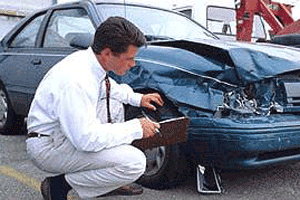 Every driver hopes that careful driving will help them avoid trouble on the road. Of course, cautious driving is one way to protect your car and your health. But there are situations where even the most careful drivers end up in an accident. So if you're informed and prepared in advance for such a situation, it will help you avoid many of the pitfalls that come up while dealing with the aftermath.
So, you've been in an accident. Your first steps:
• Stop the car.
• Put out the warning triangle.
• If there are injuries, call an ambulance.
These are the first three steps a driver caught in such an unpleasant situation must take. Remember them, since failing to do so carries criminal liability. Accident damage can vary: a broken headlight, a dented bumper, or a car that's a total write-off. The last case is, of course, the most tragic, and timely first aid can save a life. So a first-aid kit that's always with you is exactly for cases like this.
So, the first steps are done — now pay close attention! Your next steps:
• Call the police to the scene of the accident.
• Record the details of witnesses to the accident, preferably several who saw what happened.
Witnesses matter a great deal. Write down their details: full name, address, phone number. Try to note down as many people as possible.
Now the police have arrived. Your next steps should focus on:
• A correct and detailed diagram of the accident drawn up by the police officer.
• An objective description, in the report, of the damage sustained by your car and the other party's car.
Make sure the smallest details are recorded in the report, and only sign once you've actually read the document. Photographing all the damage and the scene of the accident is a useful extra step.
Your next step after the accident report is drawn up is to notify your insurance company.
Compulsory car insurance obliges a driver involved in an accident to report what happened right away. The rules and the list of documents required for this are set out in the policy.
The most painful issue is assessing the damages from the accident.
The insurance company's damage assessment can come as a shock, since minor damage, by their light hand, can be turned into what amounts to a total write-off of the car, or the other way around. Experts working alongside insurers are working in the insurers' interest. That's exactly what an independent inspection exists for.
An independent inspection protects you from manipulation of repair costs, which often happens when damages are being calculated after an accident.
Insurers will do everything they can to talk you out of it, claiming they'll carry out the necessary assessment themselves and won't pay for services you ordered independently. Don't believe them! You have the right to it.
On the claim form you fill out for the insurance company, in the section about inspecting the damaged car, you need to note, citing the law on compulsory insurance, that you'll be having an independent damage assessment done.
For the independent inspection to be recognised as valid, the following rules must be followed:
-
The independent inspection must take place during business hours.
-
Notify the insurance company in writing of the place and time it will take place (be sure to have the copy certified).
-
Carry out the independent inspection.
Its results are exactly what will help objectively calculate the damages to your car or to the other party in the accident.
Proper preparation for it will keep you from running into disputes with the insurance company.