What are oil approvals?
Or why do car manufacturers invent their own standards?
In this section: 6 articles
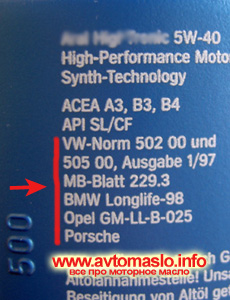 Thanks to the articles on oil viscosity and the engine oil classification, you already know that there are established methods for classifying automotive oil by quality and performance characteristics.
But, it turns out that's not enough for a lot of car manufacturers! They, apparently, go and invent their own oil approvals, and then certify engine oil against these approvals for their own engines.
In short, an engine manufacturer's approval is a specific engine oil quality standard, with defined parameters that the car manufacturer considers mandatory for oil used in its engine.
The approval process is fairly complex — in order to get the right to print some manufacturer's approval on an engine oil label, the oil producer has to obtain the corresponding certificate from that car manufacturer. In turn, before issuing such a certificate, the car manufacturer runs fairly demanding tests and analyses of the engine oil. And it's the oil producer, of course, who pays for the process (and no small amount, by the way).
Information about which approvals a particular engine oil is certified for is always present on the label (see the figure), meaning that if that information isn't there, that oil isn't certified against any approvals, whatever the salesperson tells you.