Renault RN0700, RN0710, RN17: what do the Renault and Dacia approvals mean?
Or why does oil “for Renault” come in at least seven different kinds?
In this section: 1 article
“Got a Renault? Take the oil with RN0710, it’s for all Renaults” — you can hear that advice at the shop shelf and on Logan owners’ forums. There is a more modern version too: “RN17 is the newer approval, so it’s better, put it in any engine.” Both pieces of advice are half true, and the other half can cost you an engine. Renault does not have one approval but a whole family, and each member is written for its own group of engines.
What a manufacturer approval is in general is explained in detail in the article on what oil approvals are. Its main idea still holds: an approval is not a rung on a quality ladder but a narrow specialisation of the oil for particular engines. At Renault these standards are marked with the letters RN (in one of the newer ones, AN) and a number, and they apply to Renault, Dacia and Alpine alike. First, a cheat sheet; the explanations follow.
| Approval | Which engines | Viscosity | Base (as a rule) | What replaces it |
|---|---|---|---|---|
| RN0700 | petrol engines without a turbo (except Renault Sport); 1.5 dCi without a particulate filter, under 100 hp, with a 20,000 km or one-year interval | several, from 0W-30 to 10W-40 | ACEA A3/B4, sometimes C3 | RN17 |
| RN0710 | turbo petrol engines, Renault Sport, diesels without a particulate filter, 2.2 dCi with a filter | several, from 0W-30 to 10W-40 | ACEA A3/B4, sometimes C3 | RN17 (except Renault Sport engines) |
| RN0720 | dCi diesels with a particulate filter | 5W-30 | ACEA C4 | no newer Renault standard (RN17 does not fit) |
| RN17 | petrol engines (except RS and Alpine), diesels without a filter, newer Euro 6 diesels | 5W-30 | ACEA C3 | — |
| RN17 FE | certain petrol and diesel engines in cars sold from 2018 | 0W-20 | ACEA C5 | — |
| RN17 RSA | Renault Sport and Alpine | 0W-40 | — | — |
| AN2022 | some E-Tech hybrids and newer petrol engines | 0W-16 | API SP (sometimes ILSAC GF-6B) | — |
RN0700 and RN0710: the old pair
Most cans “for Renault” carry both old numbers together: of the oils in our catalogue with RN0700, 99 out of 110 do. The requirements of these two standards seem to be close, so one formulation mostly gets both numbers. The difference lies in the engines.
RN0700 is for the simpler, non-turbo petrol engines, except the Renault Sport versions. It also covers the 1.5 dCi diesels without a particulate filter and under 100 hp, for which the manufacturer set a change interval of 20,000 km or one year.
RN0710 is for the more heavily loaded engines: turbo petrol engines, the “hot” Renault Sport versions and diesels without a particulate filter. There is also an exception worth remembering: the 2.2 dCi diesel needs RN0710 even with a particulate filter, not the low-ash diesel RN0720.
Now about viscosity. What you hear in the shop, “RN0710 means 5W-40”, is wrong: oils from 0W-30 to 10W-40 are approved under both numbers. The approval and the viscosity are two different lines of the service book, and both must match. The approval is the oil’s surname and the viscosity is its first name: to call the right one you need both. If the book says 5W-40 RN0710, then a 10W-40 with the same number on the label is not the right oil.
RN0720: a separate branch for diesels with a filter
When the dCi diesels got a particulate filter, Renault wrote a separate standard for them, RN0720. It is a low-ash oil based on ACEA C4 (sulphated ash no more than 0.5%), in practice a 5W-30. Why the ash in such an engine is counted so strictly is explained in the article on diesels with a particulate filter: the filter can burn off soot on its own, but it cannot burn off the ash from the oil.
The makers of oils approved to RN0720 specify the details as well: for the 2.0 dCi diesel (M9R) with a filter this standard has been mandatory since November 2007, with the arrival of the Laguna III. Some 1.5 dCi engines without a filter fall under it too, in Laguna IIIs built before October 2008 and in Kangoo IIs built before June 2008.
Renault put these same diesels into other makers’ cars, so other brands introduced their own numbers for the same oil. Mercedes-Benz’s MB 226.51 is built on RN0720 and is meant for Renault diesels with a filter in Mercedes cars, while Fiat 9.55535-S4 (5W-30, ACEA C4) is for the same engines in Fiat cars. So a “Mercedes” number on the can does not by itself mean that this is an oil for an engine designed in Stuttgart.
RN17: one oil instead of two, but not instead of three
For cars sold from 2018 Renault introduced a new standard, RN17: a 5W-30 oil based on ACEA C3, with mid-level ash, sulphur and phosphorus. It is meant for petrol engines (including those with a particulate filter), for diesels without a particulate filter and for the newer Euro 6 diesels that appeared from around the middle of 2018 (in Renault’s table these include the Blue dCi engines). And the main thing: Renault states plainly that RN17 is suitable for all models where RN0700 or RN0710 was required, whatever the viscosity given. This is Renault’s own decision, so the rule is the same as ever: the carmaker decides. And this is the rare case where a newer approval really does cover the older ones. The exception is the “hot” Renault Sport engines: the makers of RN17 oils say plainly that their oil is not for RS and Alpine, and for the older RS models Renault’s table lists only 5W-40 RN0710.
But only those two. Where RN0720 is specified, an RN17 oil does not go in — oil makers warn about this explicitly, and Renault’s own table extends RN17 only to models with RN0700 and RN0710: for the most part, the older dCi engines with a filter get RN0720 in it and the newer Blue dCi get RN17. The trap is that the engine name can be one and the same. In Renault’s table for Dacia, the same “1.5 dCi DPF” appears in some rows with RN0720 and in others with RN17, depending on the model and the year of manufacture. Do not guess the approval from the engine name: look in the service book or ask the dealer, quoting the VIN.
RN17 FE, RN17 RSA and AN2022: the narrower standards
1. RN17 FE is a 0W-20 oil based on ACEA C5. The HTHS of class C5 is 2.6 to 2.9 mPa·s against at least 3.5 for C3 and C4, which means the oil film in heavily loaded parts is noticeably thinner. That is why RN17 FE is not backward compatible with any other Renault standard — not with RN0700, RN0710, RN0720, RN17 or RN17 RSA, and the makers of such oils say so word for word. Note that in Renault’s table the 1.0 TCe, 1.3 TCe and 1.5 Blue dCi engines are listed with RN17, while the makers of RN17 FE oils name the same engine families for their 0W-20 as well, depending on the car and the year. The book, not the salesman, will tell you what is specified for yours.
2. RN17 RSA is the standard for Renault Sport and Alpine engines, a 0W-40 oil. For example, Renault requires it for the Megane IV R.S. with the 1.8 Turbo engine. Ordinary RN17 will not do here, and even those who sell RN17 oils stress this. As for the older “hot” engines (Clio III and IV RS, Megane II RS), Renault’s table keeps them on 5W-40 RN0710.
3. AN2022 is a 0W-16 oil. Renault specifies it for the E-Tech Full Hybrid in the Austral, Espace and Rafale, and the makers of oils approved to this standard also name the 1.2 TCe Mild Hybrid engine. Alongside it, such cans usually carry API SP, and an ACEA class is not always given. Why such a thin oil must not be poured into an engine it was not specified for (and the other way round) is explained in the article on ultra-thin oils.
Engines in the Renault–Nissan alliance are partly shared, so the maker of one RN17 FE oil claims it, for example, for the Nissan Qashqai 1.3 DIG-T MHEV as well. But for a Nissan, as for any car, its own service book has the first say.
What else turns up on the can
Not everything that begins with the word Renault concerns your passenger car. Renault Trucks RLD-2, RLD-3, RLD-5 or RXD are oil requirements for lorry diesels, covered in the article on oil for lorries and buses. And Nissan Matic or NS-2 on transmission fluids are the names of Nissan fluids for automatic gearboxes and CVTs; what such lists mean is explained in the article on universal ATF.
How to check that an approval is genuine
1. The service book or owner’s manual. It gives both the standard and the viscosity for your engine and year. I will say it again: both lines are equally important.
2. The label and the oil’s data sheet. A genuine approval stands next to the words “approved”, “approval” or the French “homologation”, and in the data sheet the maker often gives the approval number as well, something like “RN17-19-12” or “RN0720-08-005”. The same code after “meets”, “complies with” or “recommended where … is required” is a statement by the oil maker itself. There are plenty of such cans: among the oils in our catalogue with RN0700, more than half carry it only as a “meets” claim. How to read such wording and where to look for confirmation is explained in the article on how to check an oil approval.
3. The dealer, by VIN. If you have no book, the make’s official dealer will tell you which engine is in the car and which standard Renault specified for it.
So Renault is the rare case where a newer approval really does replace the older ones, but only two of them. RN17 instead of RN0700 or RN0710 — yes, except in Renault Sport engines. Instead of RN0720, RN17 FE or RN17 RSA — no. And to a salesman who says with confidence, “any oil with an RN is fine for a Renault”, you can put one simple question: “Which RN, exactly?”
Oils with the Renault RN0700 approval
All 110 oils with the Renault RN0700 approval-
Motul
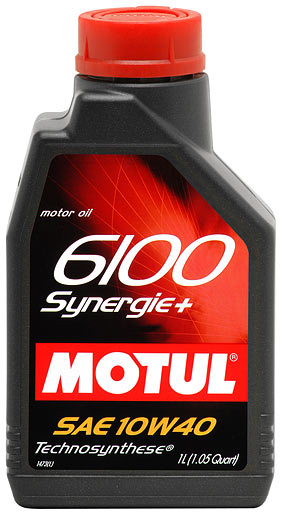
Motul 6100 SYNERGIE+ 10W-40
partly verified: some specifications could not be confirmed from an official source
- Renault RN0700
- VW 505.00
Oils with the Renault RN0710 approval
All 103 oils with the Renault RN0710 approval-
Motul
Motul 6100 SYNERGIE+ 10W-40
partly verified: some specifications could not be confirmed from an official source
- Renault RN0710
- VW 505.00