The World's First Additive Package, from Castrol
A technological breakthrough in the world of lubricants
In this section: 5 articles
1935 was a landmark year for the Castrol brand. That was the year Castrol's chemical laboratory, under Elliot Evans, first developed an additive package for engine oil. The package included anti-oxidant, anti-corrosion, anti-wear and detergent additives.
Not resting on this achievement, as early as 1938 Castrol engine oils gained viscosity additives for the first time, improving cold starts and fuel economy.
Castrol's modern history
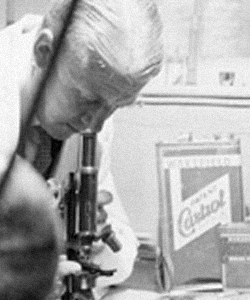 The ever-growing popularity of Castrol engine oils and lubricants eventually led the owners of CC Wakefield Co to rename the company, and from 1960 the company took the name Castrol Ltd, matching its products.
In 1966, Burmah Oil, the oldest oil company in the UK, became the owner of Castrol, and from then on the lubricants maker went by the name Burmah-Castrol. Already by 1968, the Castrol GTX line of engine oils had gone into production, and it would go on to win huge popularity among drivers.
During the global oil crisis of the 1970s, Burmah Oil received subsidies from the UK government, but in exchange had to finally part with its BP shares (partly handed to the government back in 1914).
After being taken over by the BP group in 2000, all of Burmah Oil's products, except for Castrol lubricants, have been sold under the BP brand.
All the information about the history and manufacture of Castrol automotive oils