Where is Castrol oil made?
In this section: 5 articles
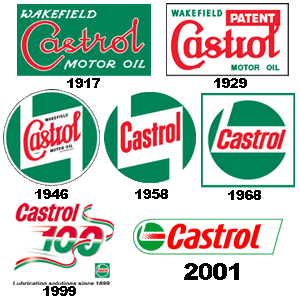 Let me say it straight away: there is no single “head plant” where all Castrol oils are made. The brand is British, but production is spread across large plants in different countries: Europe alone has eight of them, and there are more in India and China. So a can on a shop shelf may well have come from somewhere far from Britain.
Where Castrol is made today
Since the late 2000s Castrol has been concentrating output on fewer, larger plants. The company does not publish a full list with addresses, but a few European plants are known for certain. The largest of those with published figures is in Ghent, Belgium: about 170 million litres a year, mostly engine oils. Gemlik in Turkey, near Bursa, turned out 124 million litres in 2025, and Castrol itself names it as one of its eight European plants. In Germany, Castrol oils are made in Hamburg and Mönchengladbach.
A separate word on Britain. Castrol decided back in 2008 to close its last British plant, at Ellesmere Port, and moved the output to its other plants in Europe. So “country of origin: United Kingdom” in a shop listing means the brand’s homeland, not the address of a plant.
Outside Europe, Castrol oils are made, among others, at three plants in India (Patalganga, Paharpur, Silvassa) and three in China (Shenzhen, Taicang, Tianjin).
Which plant your can comes from
Castrol does not name the specific plant on the label, and production for European markets is spread across the plants described above, so you usually cannot work out where your own can came from. For a buyer in Ukraine there is one concrete fact: in Castrol’s structure Ukraine belongs to a single region with Turkey, the Caucasus and Central Asia, run by the company’s Turkish office, and Gemlik ships oil precisely to the countries of that region. I found no Castrol plant in Poland or anywhere else in Eastern Europe, although rumours of a “Polish Castrol” have been around for a long time.
But if a can or a shop listing says Turkey, that is not in itself a sign of a fake. What needs checking is the can and the seller, not the country on the label.
Is the oil different for different markets
For a long time there was a version, which brand representatives themselves once backed at dealer seminars: Castrol oils for the markets of Eastern Europe carry a somewhat different additive package, with stronger protection against oxidation, because the fuel there was higher in sulphur than in Western Europe.
Today that argument has largely lost its weight. Fuel sold in the EU has had a sulphur cap of 10 ppm for years, and since 2018 only petrol and diesel of Euro 5 or better may be sold in Ukraine, that is, with the same sulphur limit as in the EU. In spring 2022, in the first months of the full-scale war, Ukraine temporarily relaxed the requirement, but restored it at the start of 2024. So a “special oil for the local fuel” now sounds like history.
In my view, what you should look at is not the country on the can but the approvals. If the can carries the approval your car’s manufacturer requires, that is what matters, whichever plant the oil was filled at.
Who owns Castrol now
Castrol has long belonged to BP, but even that is changing. In December 2025 BP agreed to sell a controlling 65% of Castrol’s shares to the American investment company Stonepeak and keep 35%. The deal is expected to close by the end of 2026, after regulatory approvals. For the driver this changes nothing yet: the names, ranges and approvals of Castrol oils stay the same, and production is still spread across plants in different countries. More in the article on who owns the oil brands today.
How not to buy a counterfeit
Wherever a Castrol oil is made, the genuine one is a good product. The trouble is that a popular brand is eagerly counterfeited. In spring 2025 Ukraine’s Bureau of Economic Security uncovered an underground operation in Kyiv, the Kyiv region and the Dnipropetrovsk region that bottled engine oils of “well-known world brands”, over 3 tonnes a day.
Castrol defends itself. In some markets, for example Ukraine, the brand’s local site suggests scratching off the protective coating on the label and checking the code underneath on the authenticity page (original.castrol.com), and it also lists official online sellers. Check what Castrol’s site for your country offers. Buy from an official distributor or from a shop that Castrol itself names, and keep the receipt. More in the article on how not to buy a counterfeit.
Everything about the quality and brand history of Castrol oils
Select a Castrol engine oil by car make
Castrol oils in the catalogue
All 58 oils-
Castrol
Castrol CRB Multi 15W-40 CH-4
partly verified: some specifications could not be confirmed from an official source
- API CH-4