What types of car paint are there, and why do you need car-care chemicals
In this section: 77 articles
- DIY repair of tubeless tyres
- General recommendations for storing and using chains
- Equipment for pumping heavily contaminated fluids
- Packaging board and its properties
- Inflating tyres with inert gases: myths and reality
- SULPHIDE CAPACITY AND OPTICAL BASICITY OF STEELMAKING SLAGS IN STEEL PROCESSING
- What to look out for before fitting a car alarm
- A profiled-sheet rolling mill
- Insulated glass units: the window's key element
- A Group Surprise
- Nanotechnology in everyday life
- The market for demand and consumption of PET strapping in Russia
- Generating electricity at home
- The advantage of using a garage
- ABS, EBD, BAS and other active safety systems
- All types of manual transmission (MT)
- What to give a car owner, and not only a car owner
- Installing a water pressure reducer and why it matters.
- A few tips for an office move
- What types of car paint are there, and why do you need car-care chemicals
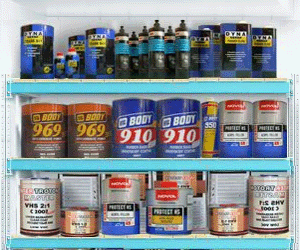 Choosing the right car paint is a fairly serious matter. The components of car paints are usually mixed at the factory. By the way they're applied, paints can be divided into base coats and exclusive finishes, into topcoats, and into paints sold as spray-can aerosols.
All car paints are conventionally split into two main types: synthetic and acrylic. Acrylic car paint is better suited to inexpensive, budget car models. A hardener and a thinner are added to an acrylic-based paint, and the thinner helps you dial in the viscosity you need. The main advantages of acrylic paint are a higher gloss level compared with synthetic paint, and faster drying and hardening. When painting with acrylic, it's possible to wipe debris off the car, and acrylic paint holds up better against damage and the effects of the environment.
Acrylic car paint, in turn, splits into two classes: HS (hard coating) and MS (soft coating). The first group is ideal for full paint jobs, while the second group is better used for partial painting during car repairs.
Unlike acrylic paint, synthetic paint doesn't need any special hardening treatment. Synthetic paint dries as one of its components – the thinner – evaporates. There's another downside too: it can take around six months for the paint to fully dry. Synthetic paint suits car owners well when they want a higher quality finish and a better overall look.
Car-care chemicals matter a great deal for a car too. With them you can protect plastic trim from fading in the sun. Using car-care chemicals and cosmetics can help make your used car look new again. With the right products you can "refresh" your car's leather interior and clean stains out of a fabric interior. Remember that when selling a car, what matters isn't just its technical condition and specifications, but also a flawless appearance. Specialised car-care chemicals will give your car back its shine and help you when it comes time to sell it.