What to look out for before fitting a car alarm
In this section: 77 articles
- DIY repair of tubeless tyres
- General recommendations for storing and using chains
- Equipment for pumping heavily contaminated fluids
- Packaging board and its properties
- Inflating tyres with inert gases: myths and reality
- SULPHIDE CAPACITY AND OPTICAL BASICITY OF STEELMAKING SLAGS IN STEEL PROCESSING
- What to look out for before fitting a car alarm
- A profiled-sheet rolling mill
- Insulated glass units: the window's key element
- A Group Surprise
- Nanotechnology in everyday life
- The market for demand and consumption of PET strapping in Russia
- Generating electricity at home
- The advantage of using a garage
- ABS, EBD, BAS and other active safety systems
- All types of manual transmission (MT)
- What to give a car owner, and not only a car owner
- Installing a water pressure reducer and why it matters.
- A few tips for an office move
- What types of car paint are there, and why do you need car-care chemicals
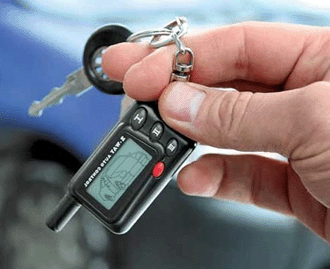 Protecting cars from break-ins and theft is one of the pressing issues in the automotive world today. You'd think that, after years of the industry producing all kinds of protective devices and mechanisms to guard a car against intrusion, everything worth saying or writing about it already has been — but the market is a highly dynamic structure, constantly growing and being refreshed, so the issue never loses its relevance. Despite the wide choice of protective devices, many drivers still rely on car alarms to keep their "four-wheeled steel horses" safe. A car stopped being a luxury item long ago. More and more people are becoming vehicle owners, especially in our country. Even given the huge selection of car alarms and the sheer volume written about them, people keep making serious mistakes both in choosing the right alarm and in having it fitted. Many vehicle owners understand that their car needs protecting, and a car alarm is often fitted right after the car is bought. Most people think an alarm will provide not only proper protection for their vehicle but also a certain level of comfort when using the car.
Modern alarms generally come with a range of functions that handle locking and unlocking the doors from the fob, engine warm-up and a start timer. There are several types of such devices: one-way and two-way, GSM car alarms, and alarms with remote start. Drivers most often prefer to settle on two-way car alarms. These are sometimes also called feedback alarms. This means all information about a change in the car's state gets sent back to the alarm's fob.
Before fitting a car alarm with a remote-start function to your car, carefully study the list of available models and, in particular, where it will be installed. If a service technician tells you the remote-start function won't affect your car's anti-theft properties in any way, don't believe them — chances are you're dealing with an incompetent worker, or one who's deliberately misleading you. Either way, they're not to be trusted. So before choosing a service centre and agreeing to have a car alarm fitted, carefully research the service centres offering this kind of work, and talk to the technician who's going to be installing the alarm on your car. The thing is, this function essentially "prepares" the car for a trip. You have to admit, it's nice, especially in winter, to get into an already-warmed car and set off straight away, instead of waiting for the engine to warm up, losing precious minutes and shivering with cold inside your own car. Why bring this up at all? Because sometimes an experienced thief only needs a few minutes to steal a car. And if the car is already warmed up and ready to move off, that only makes the job easier for them. But that's only if your car's security system is flawed or outdated.
It's worth remembering that it's not only protective equipment that keeps improving, but also the devices used to get around it and disable it. So try to keep up with what's new on the market for car alarms and anti-theft protection, so that your security system doesn't end up being just a "latch on a safe door".