Choosing a boat motor
In this section: 77 articles
- DIY repair of tubeless tyres
- General recommendations for storing and using chains
- Equipment for pumping heavily contaminated fluids
- Packaging board and its properties
- Inflating tyres with inert gases: myths and reality
- SULPHIDE CAPACITY AND OPTICAL BASICITY OF STEELMAKING SLAGS IN STEEL PROCESSING
- What to look out for before fitting a car alarm
- A profiled-sheet rolling mill
- Insulated glass units: the window's key element
- A Group Surprise
- Nanotechnology in everyday life
- The market for demand and consumption of PET strapping in Russia
- Generating electricity at home
- The advantage of using a garage
- ABS, EBD, BAS and other active safety systems
- All types of manual transmission (MT)
- What to give a car owner, and not only a car owner
- Installing a water pressure reducer and why it matters.
- A few tips for an office move
- What types of car paint are there, and why do you need car-care chemicals
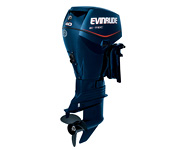 The wide availability of countless fishing products these days has made life much more interesting and much easier for keen anglers. They now have all kinds of fishing tackle and gear at their disposal, and, of course, powerboats and boats. An angler who has such a wonderful means of transport as a boat fitted with a motor, or a powerboat, becomes far more mobile and can afford to pick the best spot to fish from. Various models of modern engines from makers in Japan, the US and Russia are now on sale, differing in power and other technical characteristics. The latest engineering advances and the most modern materials are used to make these products, which lets you feel confident about the quality and reliability of the motors.
Now that countries are introducing strict requirements around the environmental safety of products, makers pay particular attention to their products' fuel economy, environmental safety, and ease of use and servicing. Prices for boat motors vary widely, and to avoid getting lost in that variety, when buying a boat motor you need to take several factors into account.
All boat engines are split into 2-stroke and 4-stroke, and which type of motor you choose depends above all on where and for what purpose you'll be taking your boat out. A two-stroke engine is the simplest in design and to service, is notably compact and lightweight, picks up revs quickly on start-up, and can run on medium-quality petrol. From this description it's clear that such a motor is convenient to transport thanks to its size and, as you'd guess, costs less. If you're planning to travel short distances on the water, a low-power two-stroke motor is a good choice.
Four-stroke boat engines are larger and cost considerably more, but they have a number of advantages, including a long service life and economical fuel consumption. Such motors run quieter, pollute the environment far less, and hold their revs well. More powerful motors are essential for long trips across bodies of water and for water sports and recreation, meaning waterskiing and towing inflatables.
To decide what engine power to choose, you also need to follow the boat manufacturer's recommendations. The manual will always state the motor's maximum power rating, which must not be exceeded.
To make a successful choice of outboard boat motor, you need to put in some work: gather information, compare specifications, and ask people you know. But every true outdoor enthusiast knows this is an enjoyable kind of hassle. Having chosen a reliable, long-lasting motor, you'll feel real satisfaction from your time out on the water. Enjoy your time off!