Choosing a compact pressure washer for home use
In this section: 77 articles
- DIY repair of tubeless tyres
- General recommendations for storing and using chains
- Equipment for pumping heavily contaminated fluids
- Packaging board and its properties
- Inflating tyres with inert gases: myths and reality
- SULPHIDE CAPACITY AND OPTICAL BASICITY OF STEELMAKING SLAGS IN STEEL PROCESSING
- What to look out for before fitting a car alarm
- A profiled-sheet rolling mill
- Insulated glass units: the window's key element
- A Group Surprise
- Nanotechnology in everyday life
- The market for demand and consumption of PET strapping in Russia
- Generating electricity at home
- The advantage of using a garage
- ABS, EBD, BAS and other active safety systems
- All types of manual transmission (MT)
- What to give a car owner, and not only a car owner
- Installing a water pressure reducer and why it matters.
- A few tips for an office move
- What types of car paint are there, and why do you need car-care chemicals
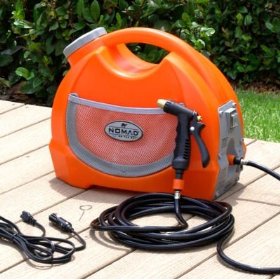 It's hard these days to find a car owner who's indifferent to how their car looks; body designs keep getting more appealing, the colour palette ever more varied, and hiding all that under a layer of dirt is simply becoming irrational.
That's why demand for car wash services keeps growing with every new car owner. Keeping pace with that demand is car owners' desire to clean their car on the inside too. Interior dry cleaning is still a fairly pricey procedure, whereas running a vacuum over the seats and mats is well within any car owner's own ability.
Many drivers prefer not to rely on the quality of service at a car wash and choose to wash the car themselves, and even take real pleasure in it. Few people these days still use the old-fashioned way of washing a car: a bucket and a sponge. Touchless washing technology has become the standard, letting you not only wash a car clean of dirt and road grime properly but also avoid the micro-scratches on the bodywork that can lead to corrosion. What's more, a mini pressure washer can be a helper for more than just washing the car. Sure, it can't handle dry-cleaning upholstered furniture, but washing a house, guttering or paving is very simple for it. If you use a high-pressure washer, you'll use only about 20% of the water that job would need with a garden hose.
Compact washers can be mobile, mounted on castors, mains-powered or with a standalone power source, and they may or may not have a water-heating function. You can connect the washer to the mains water supply, or you can use containers of water. As a rule, good-quality pressure washers have a pump unit made from aluminium alloys — one of the washer's key components — and repairing it can cost up to 70% of the price of a new machine. So don't buy pressure washers with a plastic pump unit, since such washers have a short service life. A portable washer has a simplified gun design compared with professional models. Its pump unit is made from cheaper materials, and the valves mean a non-professional washer can only be used for a limited time each day, with a working stretch of no more than two hours. Even so, that's more than enough time to wash even two cars.
The bundled kit also varies depending on the mini pressure washer's price. As standard, a pressure washer consists of a high-pressure hose, a gun, a connector and a pressure-adjustment nozzle. Extra accessories can include canisters for chemical cleaning agents, and nozzles and suction tubes for detergents. With the help of various attachments, you can tackle all sorts of household upkeep tasks. A mini pressure washer can help clean drains, treat building facades, remove paint stains from hard surfaces, and even wash floors across large areas. Compact pressure washers are a good choice for keeping your car, house and garden clean.