Why do you need parking sensors?
In this section: 77 articles
- DIY repair of tubeless tyres
- General recommendations for storing and using chains
- Equipment for pumping heavily contaminated fluids
- Packaging board and its properties
- Inflating tyres with inert gases: myths and reality
- SULPHIDE CAPACITY AND OPTICAL BASICITY OF STEELMAKING SLAGS IN STEEL PROCESSING
- What to look out for before fitting a car alarm
- A profiled-sheet rolling mill
- Insulated glass units: the window's key element
- A Group Surprise
- Nanotechnology in everyday life
- The market for demand and consumption of PET strapping in Russia
- Generating electricity at home
- The advantage of using a garage
- ABS, EBD, BAS and other active safety systems
- All types of manual transmission (MT)
- What to give a car owner, and not only a car owner
- Installing a water pressure reducer and why it matters.
- A few tips for an office move
- What types of car paint are there, and why do you need car-care chemicals
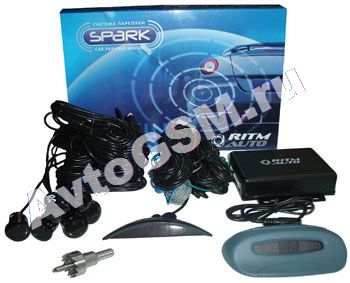 Let's start by working out what a device called a "parking sensor" system actually is. A parking sensor, or parking radar, is a kit made up of a control unit, a display with an audible and/or visual distance indicator, and either 4, 6 or 8 flush-mounted or surface-mounted sensors, which are fitted into the car's bumper. The display is mounted on the dashboard inside the car and tells the driver the distance to an obstacle.
The parking radar measures the distance to an obstacle using an ultrasonic signal. The idea is that the ultrasonic signal sent out bounces off the obstacle in front of it, allowing the system to work out not only the distance to it, but also its size and shape, with high precision. The system switches on when reverse gear is engaged (that is, while you're parking). A good-quality parking sensor's signal takes as little as 0.1 seconds to process.
A parking sensor significantly improves the safety of parking and helps avoid dents and scratches to the car in tight spots, in the dark, and in poor weather conditions.
Nowadays, many parking radars can connect to the main unit of a rear-view camera, which helps spot obstacles that a parking sensor can't detect, such as open manholes, potholes or bollards.
When using a parking sensor, remember that dirty parking sensors lose sensitivity, so you always need to keep them clean.
Poorly done painting of the sensors (to match the car's colour) can also lead to inaccurate readings. Because of this, the ideal option is to buy sensors in the colour you need, factory-painted. The only parking radar on the market today that lets you choose the exact colour of its sensors is the Spark parking sensor from the Russian manufacturer RitmAvto. It comes in 13 sensor colours, matching the most popular car paint colours.
The parking sensors mentioned here, like many others, can be bought from the online shop AvtoGSM.ru with cash on delivery. Parking sensors are delivered to any region of Russia and paid for on receipt!