What Types of Tyre Tread Are There?
In this section: 77 articles
- DIY repair of tubeless tyres
- General recommendations for storing and using chains
- Equipment for pumping heavily contaminated fluids
- Packaging board and its properties
- Inflating tyres with inert gases: myths and reality
- SULPHIDE CAPACITY AND OPTICAL BASICITY OF STEELMAKING SLAGS IN STEEL PROCESSING
- What to look out for before fitting a car alarm
- A profiled-sheet rolling mill
- Insulated glass units: the window's key element
- A Group Surprise
- Nanotechnology in everyday life
- The market for demand and consumption of PET strapping in Russia
- Generating electricity at home
- The advantage of using a garage
- ABS, EBD, BAS and other active safety systems
- All types of manual transmission (MT)
- What to give a car owner, and not only a car owner
- Installing a water pressure reducer and why it matters.
- A few tips for an office move
- What types of car paint are there, and why do you need car-care chemicals
When choosing the right winter or summer footwear, the first thing we look at is the quality of the sole. Puddles, slush, ice and sharp stones won't scare you if the sole is well made and not some cheap knock-off. As for your beloved car, its footwear is the tyres, and the tread is the equivalent of that sole. The purpose of tread is already clear from its name — in English the word itself comes from "to tread," meaning to walk or press down on.
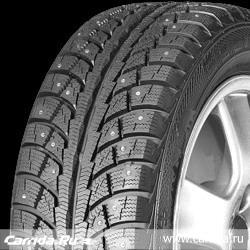
Directional tread
Just as the sole of a light sandal differs from the sturdy sole of a winter boot, summer and winter tread differ from each other. A summer tread, for instance, has no special sipes at all, so in January or February it simply turns rock-hard. What's more, summer tread doesn't grip snowy or icy roads well enough, which can be dangerous for both passengers and bystanders. Winter tread, on the other hand, quickly turns soft in hot weather and wears down under almost any longitudinal or lateral load, including ordinary cornering, acceleration and braking. As a result, its grip drops noticeably, braking distances grow much longer, and handling gets worse.
Quite often a car owner's choice of tyres comes down to the tread pattern itself, which can be directional, non-directional, or asymmetric. The most popular option today is the non-directional pattern, which lets a tyre keep all its properties regardless of the direction of rotation. Besides being versatile, tyres with a non-directional tread pattern are also considerably cheaper than the alternatives and are used as original equipment by many car makers.
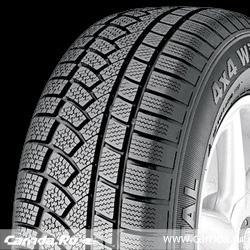
Asymmetric tread pattern
Directional tread, for its part, is much better at clearing water from the contact patch. At the same time, its effectiveness depends entirely on the direction of rotation, and if the tyres are mounted the wrong way round, the driver isn't protected from hydroplaning.
An asymmetric tread pattern means two completely different patterns are combined on the surface of a single tyre. Thanks to this combination, designers have managed to bring together several tread properties in one tyre — and quite successfully too. The inner part of the tread, for example, performs beautifully in wet conditions, while the outer part is simply irreplaceable on dry roads.