Budget cars: pros and cons
In this section: 77 articles
- DIY repair of tubeless tyres
- General recommendations for storing and using chains
- Equipment for pumping heavily contaminated fluids
- Packaging board and its properties
- Inflating tyres with inert gases: myths and reality
- SULPHIDE CAPACITY AND OPTICAL BASICITY OF STEELMAKING SLAGS IN STEEL PROCESSING
- What to look out for before fitting a car alarm
- A profiled-sheet rolling mill
- Insulated glass units: the window's key element
- A Group Surprise
- Nanotechnology in everyday life
- The market for demand and consumption of PET strapping in Russia
- Generating electricity at home
- The advantage of using a garage
- ABS, EBD, BAS and other active safety systems
- All types of manual transmission (MT)
- What to give a car owner, and not only a car owner
- Installing a water pressure reducer and why it matters.
- A few tips for an office move
- What types of car paint are there, and why do you need car-care chemicals
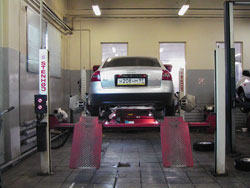 Demand for budget foreign cars is growing worldwide day by day. Many major carmakers have already announced they're ready to move ahead with plans to build cheap cars. Plants such as Toyota, Nissan, Renault and Škoda plan to assemble their low-budget cars, priced from 8,000 dollars, in China, India and Indonesia, and ship them to third-world countries, including Russia. Among the budget cars sold today, the Nissan Almera has established itself as the highest quality, though its price runs above 16,000 dollars. Its value falls with use, but even then the car keeps its presentable look and its driving capabilities.
Older foreign cars, such as BMWs and Audis, are still popular thanks to the quality of their components and how solidly they're built. For instance, repairing an Audi with quality parts made from good, corrosion-resistant steel lets you run the car for no less than 10 years. And cars like that can't cost less than 35,000 dollars. This raises the question: what quality, then, can you expect from a low-budget car? This is precisely why we see so many old foreign cars on the streets — they're worth repairing.
With budget cars, though, things are quite different. Coming off a fully automated assembly line, without manual labour, in enormous production runs, they're essentially unfit for any repair beyond swapping whole assemblies, and on top of that they have a short service life, which is exactly why these affordable cars are so cheap.
For example, over the entire time you run an expensive German car, you might only ever need to repair the ABS on an Audi, or the automatic transmission on a BMW, once. Whereas similar failures on a budget car can put an end to running it altogether, given the disproportionately high cost of repairs relative to the car's own value, and the need to replace whole assemblies. There's also a shortage of official service centres for such cars, driven by the flood of breakdowns and rising rents within the city. This forces service centres to set up outside the city, which affects whether they have qualified staff on hand. Major car brands, as a rule, have official dealers in many cities who back their cars with a warranty and provide warranty and service repairs at maintenance centres, such as the Audi service centre in Moscow.