Wheel alignment: the specifics of Audi repair
In this section: 77 articles
- DIY repair of tubeless tyres
- General recommendations for storing and using chains
- Equipment for pumping heavily contaminated fluids
- Packaging board and its properties
- Inflating tyres with inert gases: myths and reality
- SULPHIDE CAPACITY AND OPTICAL BASICITY OF STEELMAKING SLAGS IN STEEL PROCESSING
- What to look out for before fitting a car alarm
- A profiled-sheet rolling mill
- Insulated glass units: the window's key element
- A Group Surprise
- Nanotechnology in everyday life
- The market for demand and consumption of PET strapping in Russia
- Generating electricity at home
- The advantage of using a garage
- ABS, EBD, BAS and other active safety systems
- All types of manual transmission (MT)
- What to give a car owner, and not only a car owner
- Installing a water pressure reducer and why it matters.
- A few tips for an office move
- What types of car paint are there, and why do you need car-care chemicals
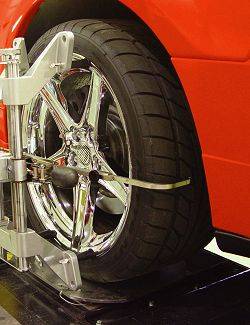 The wheel alignment procedure on an Audi is needed to keep the car handling properly, and it lets you avoid both premature tread wear and more serious trouble. How often the alignment should be done is set separately by the manufacturer and varies from model to model. The intervals are usually stated in the car's service book. In most cases the job is done every ten to fifteen thousand kilometres.
The usual signs that alignment is needed are the car drifting off its line of travel, in other words the unpleasant sensation of the car pulling to one side, or a mismatch between the wheel's turning angle and the angle you've put on the steering wheel. A characteristic tyre squeal on turns at a service centre is also a sign that Audi repair work is needed. Alignment is likewise required after suspension work has been done on an Audi, or after work on parts of the steering mechanism. For all such cases there is one address where you'll get the help you need — an Audi service centre in Moscow.
Alignment is normally carried out only after every existing play in the relevant front suspension components has been fully eliminated, and only once there are no faults in the shock absorbers. Once the car has been brought up to these requirements, the degree of wheel runout is checked. Next, the technician makes sure tyre pressure meets the specification, topping it up as needed. And finally, the required alignment angles are set on the wheels. Without question, this whole set of jobs is best carried out only at a garage specially equipped for it. The sophisticated technical level of modern cars, together with manufacturers' constant work introducing new technological systems for safe operation, rules out the possibility of proper diagnostics and competent repair by "garage" mechanics. A service centre's level of equipment has to match the car's technical sophistication, and the mechanics' qualifications have to be sufficient for sound diagnostics and quality repair of cars with faults of any level of complexity.